Published May 2026. Updated annually by the SuitCentury editorial team.
This is SuitCentury's 2026 Wedding Suit Trends Report. It covers the five style
changes shaping how grooms and wedding parties are dressing this year. The findings draw
on Pinterest's annual trend forecast, search demand data from Google, recent industry
data on weddings, and SuitCentury's own customer order patterns from across the 2025
wedding season. The report is built for grooms who are actively planning a wedding in
2026, but it should also be useful for wedding planners, stylists, and family members
helping with attire decisions.
The biggest shift in 2026 wedding suiting is the move away from the navy and charcoal
default. Earth tones are taking over for outdoor and garden weddings. The three-piece
suit is back for grooms looking to stand apart from their groomsmen. The
matching-uniform look for the wedding party itself is fading, replaced by coordinated
palettes with intentional variation. Fabric choice is becoming as much about venue as
season. The white dress shirt is no longer the automatic pick. This report walks through
each of these five trends with examples and styling notes.
Methodology
The trend signals in this report come from four sources. The first is Pinterest's
annual Pinterest Predicts wedding forecast for 2026, which covers color
palettes and visual themes for the year. The second is search demand data from Google Trends for
queries related to wedding suits, groom attire, and wedding color palettes between
January 2024 and April 2026. The third is industry data from The Knot on wedding
spending, guest counts, and venue types. The fourth is SuitCentury's internal order data
covering wedding-party purchases across the 2025 calendar year. Quantitative claims are
cited inline.
Trend 1: Earth-Tone Palettes Replace Navy and Charcoal
For most of the last decade, navy and charcoal have been the default colors for the
groom's suit. That is changing in 2026. The dominant palette is warm and earthy.
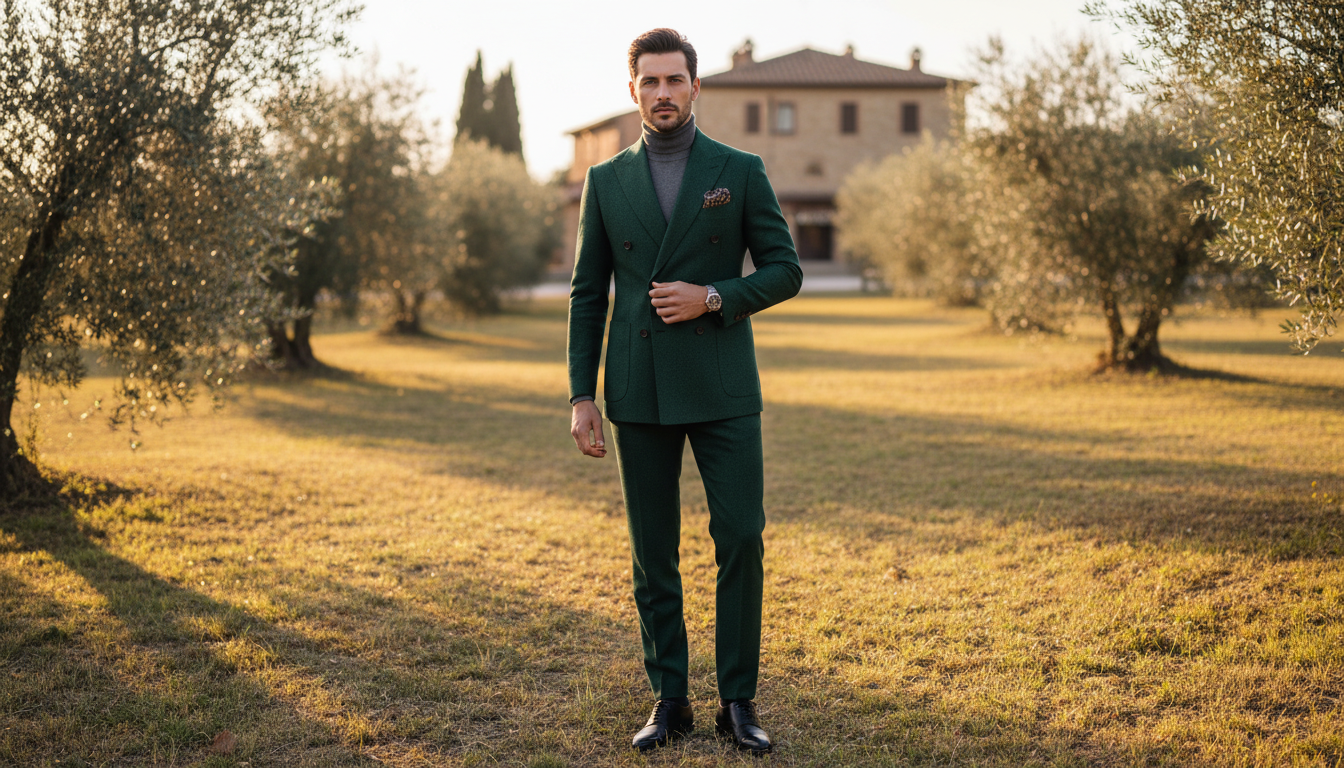
Terracotta, sage green, espresso, warm camel, and dusty rose are showing up across the
spring and outdoor wedding season. Pinterest's 2026 wedding forecast named warm earth
tones among the top wedding color directions for the year, and Google Trends data backs
this up. Searches for "sage green wedding suit" and "terracotta wedding suit" are both
up over the past twelve months.
The shift is most visible at outdoor and garden weddings, where earth tones
photograph well against natural backgrounds. They also pair more easily with the matte
florals and dried palms that are dominating wedding decor right now. For couples who
have chosen their venue and color palette before thinking about suit colors, this
matters: a sage green or terracotta suit will read as cohesive against most
outdoor-wedding decor in a way that a navy suit simply cannot.
Which Earth Tone Works for Which Wedding
Terracotta works best for autumn and late-spring outdoor weddings, especially at
rustic, desert, or vineyard venues. Sage green is the year-round option in this palette
and is strongest at garden ceremonies. Espresso and warm camel give a more formal,
restrained version of the trend and work for indoor and evening weddings. Dusty rose is
the most divisive choice. It photographs beautifully in soft natural light but can read
costume-like under harsh indoor lighting, so it is best reserved for outdoor ceremonies
with a soft-light setting.
What to Pair With an Earth-Tone Suit
The mistake most grooms make with earth tones is over-styling them. A terracotta suit
does not need a contrasting accent. Pair it with a cream or warm-white shirt, a brown
or rust tie in a slightly different tone from the suit, and brown leather shoes. Black
shoes look harsh against earth tones. For sage green the rules are similar: cream or
pale-yellow shirt, a tie in a deeper green or warm brown, and brown or tan leather
shoes.
For more conservative grooms, espresso and warm camel are an easier entry point into
the trend. Both work well with a standard white shirt without breaking the warm palette,
which makes them a safer pick if the wedding party is mixed in formality. SuitCentury's
fall and autumn suit collection is the
strongest entry point for terracotta and espresso looks.
Trend 2: The Three-Piece Comeback
The three-piece suit is having its biggest moment in over a decade. After years of
two-piece dominance, the waistcoat is back in wedding wear. The driver is practical.
Grooms want to look distinct from their groomsmen, and adding a waistcoat is the
simplest way to do it when the entire wedding party is wearing the same suit color.
This is not the same waistcoat trend as the early 2010s vintage-rustic moment. In
2026 the waistcoat is cut closer to the body, sits higher on the chest, and is more
often matched in fabric to the rest of the suit rather than contrasted in a separate
material. Pocket watches and chains, which had a brief revival around 2012, are also
returning, this time as a small accent rather than a centerpiece.
How to Style the Three-Piece for the Groom
The cleanest 2026 approach is for the groom to wear a full three-piece in a single
color while the groomsmen wear two-piece versions in the same color. That keeps the
wedding party visually unified while clearly distinguishing the groom. The contrast does
not need to be large. Even a same-color vest reads as a clear separation in wedding
photos.
For grooms who want a slightly bolder version, the waistcoat can be in a different
fabric weight from the jacket and pants. A textured wool vest with a smooth suit fabric
works well, particularly for evening receptions. Avoid contrasting colors. A tan vest
with a navy suit reads as costume rather than current.
When to Skip the Three-Piece
Three-piece looks are not always the right call. For very warm outdoor weddings above
80°F, adding a vest can be uncomfortable through the entire reception. In that case the
cleaner distinction is for the groom to wear a different shirt color or a boutonniere
style that the rest of the party does not. Beach weddings also tend to look better in
two-piece or unstructured jackets rather than vests.
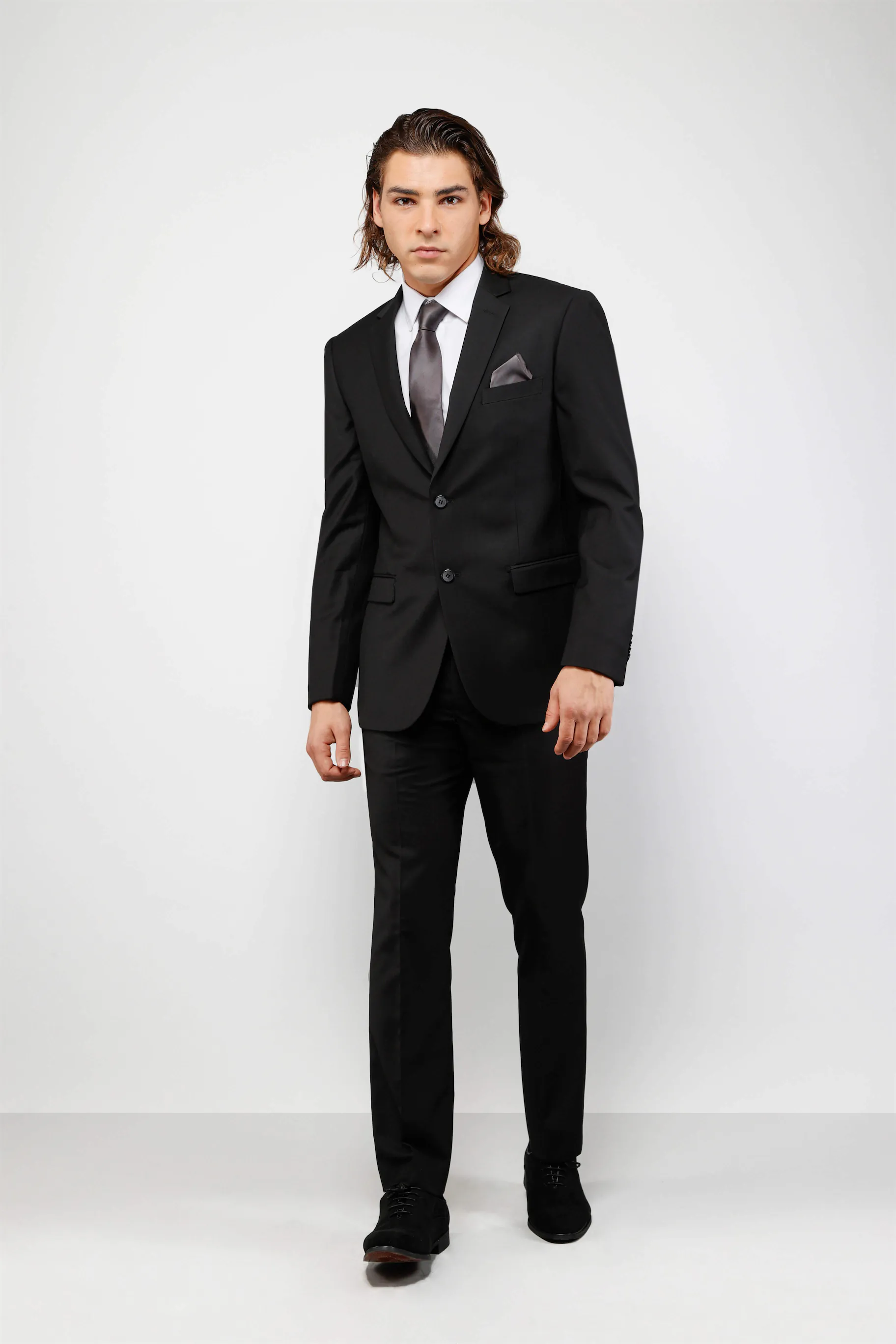
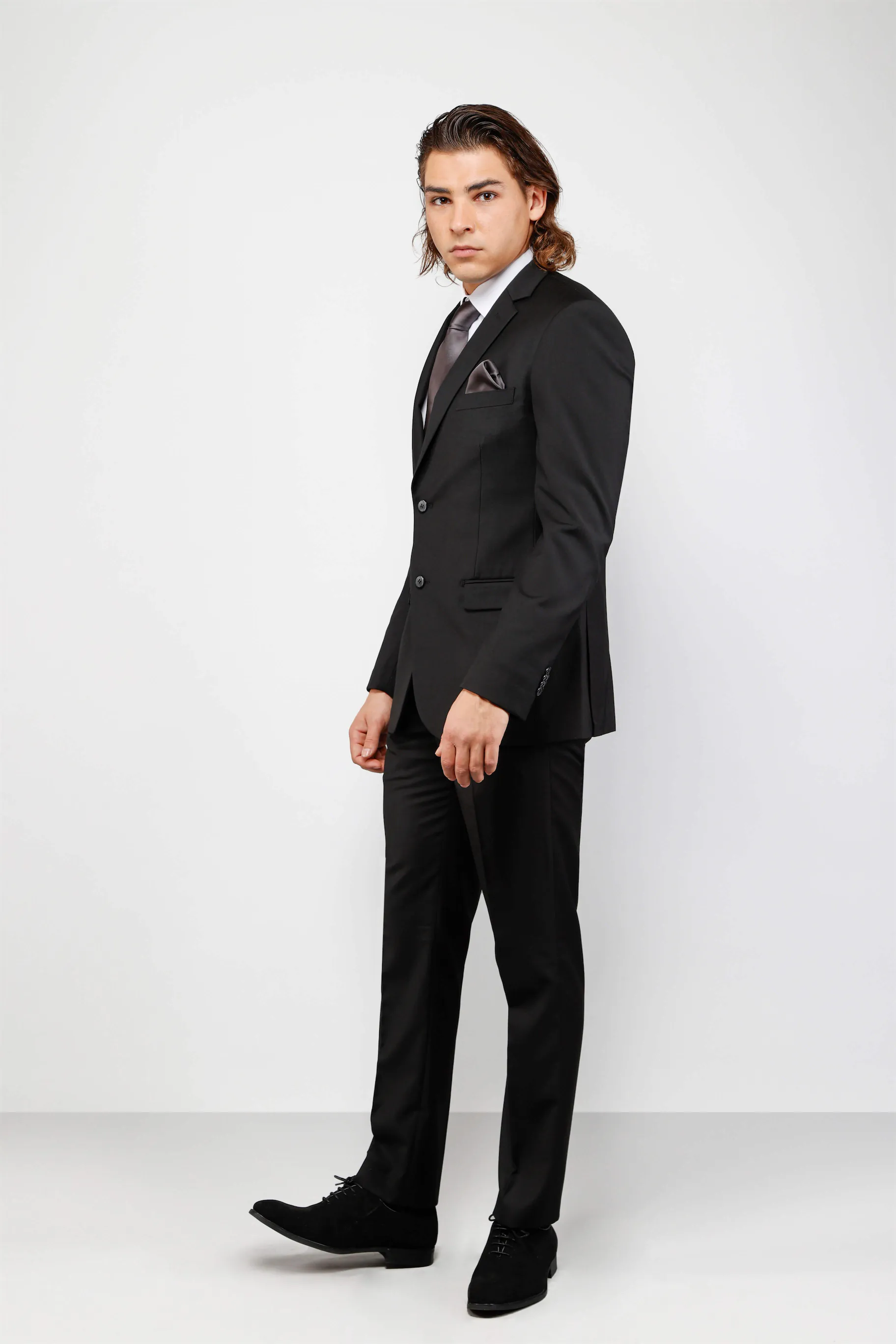
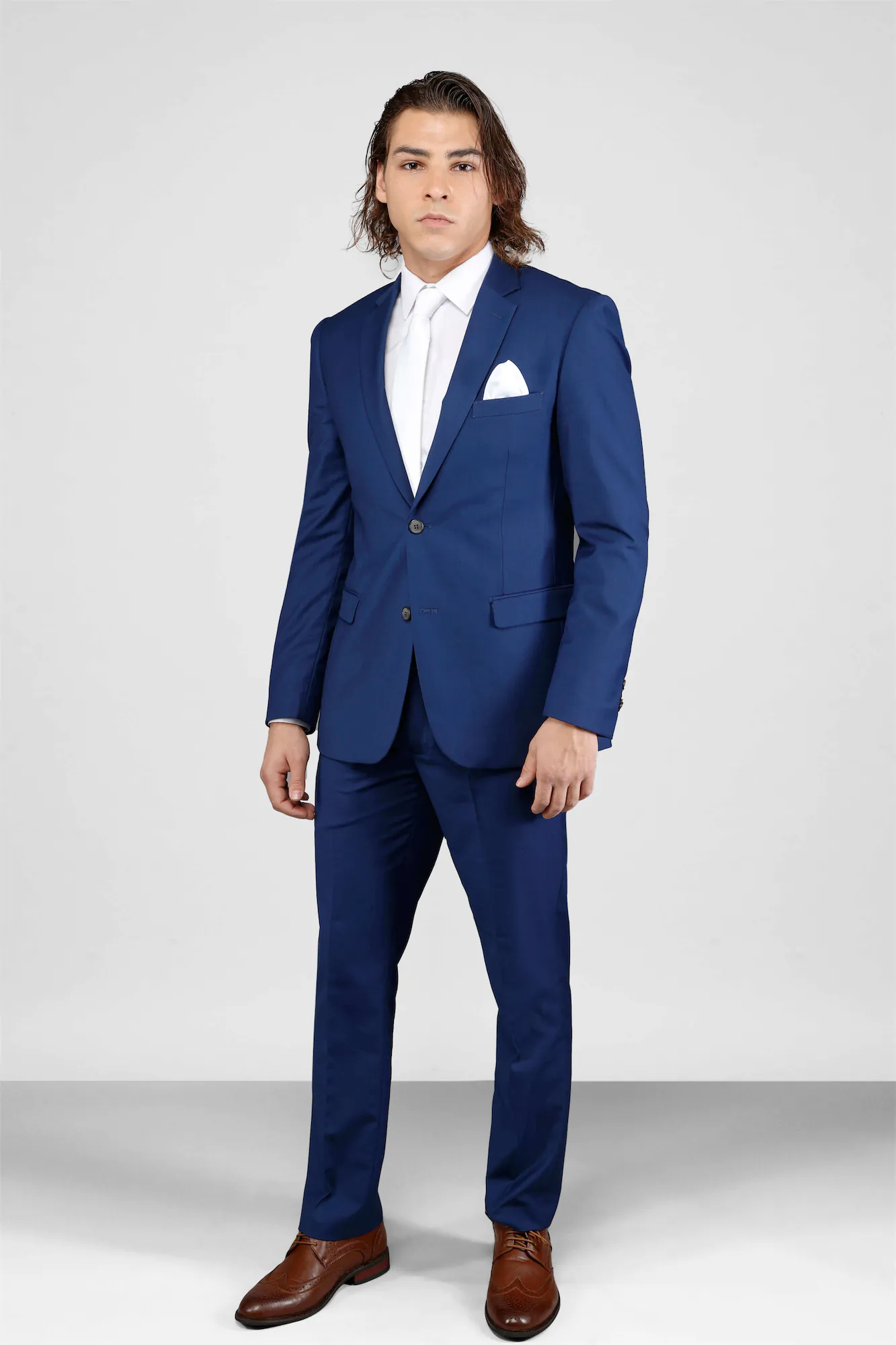
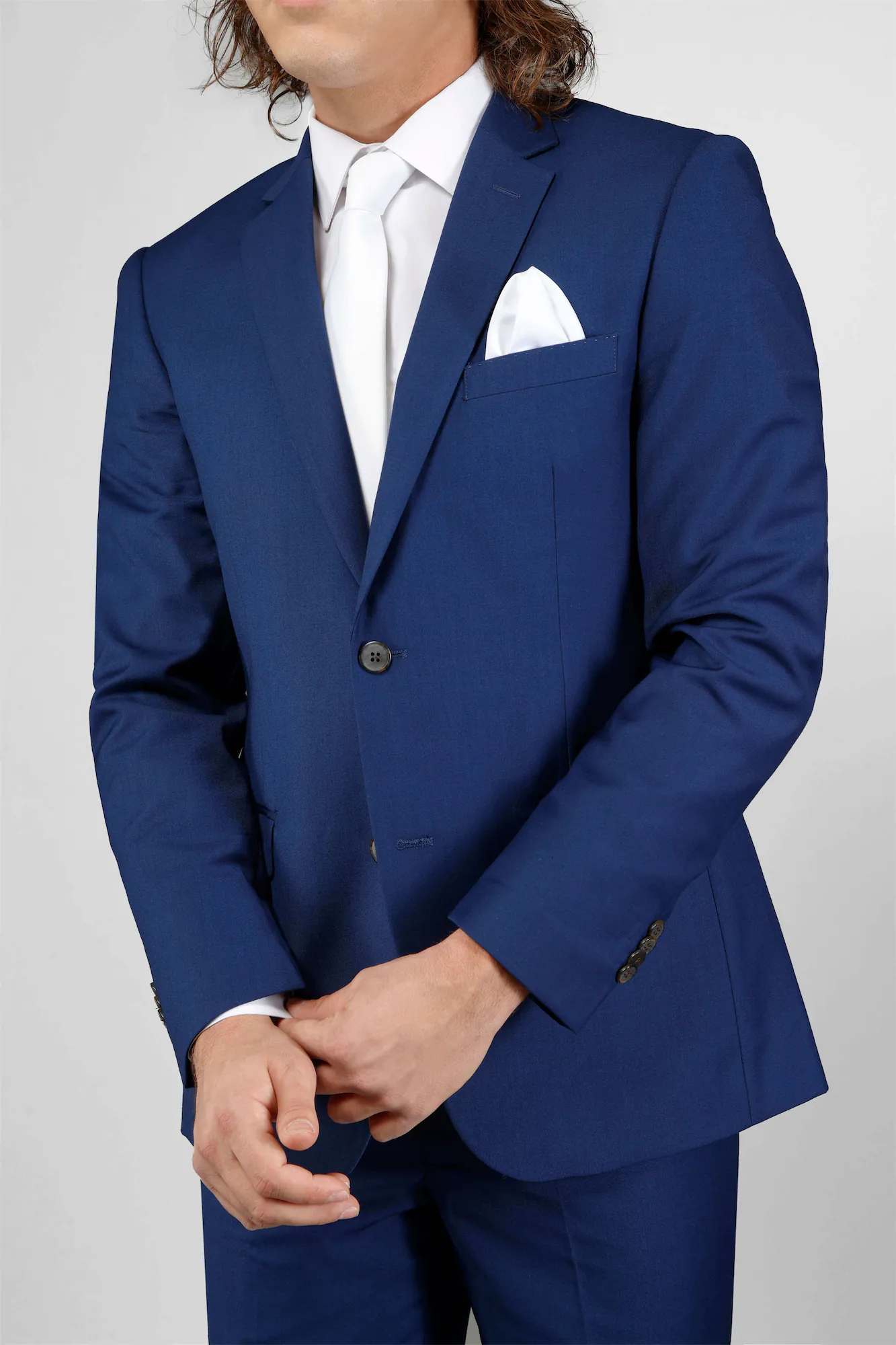
Most of SuitCentury's suit and tuxedo bundles can
be configured as either two-piece or three-piece, which makes it straightforward to set
up a wedding party with the groom in a vest and the groomsmen without.
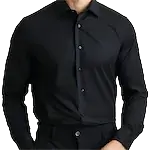
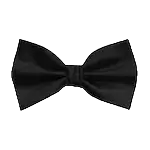
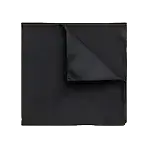
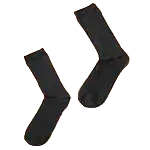
WEDDING SUIT BUNDLE SALE Jacket-Pants Your Chose Of Shirt- Long or Bow Tie-Pocket Silk & Socks Included
-
Trend 3: Wedding Parties Move Past the Matching-Uniform Look
The identical-look wedding party is fading. In 2025, around 60 percent of
wedding-party orders at SuitCentury included some kind of intentional variation between
groomsmen, up from under 30 percent in 2022. The 2026 approach keeps the suit color and
cut consistent across the party but lets each groomsman wear a different tie, pocket
square, or vest. Some weddings extend the variation to different shoes or different
shirt colors. The goal is a wedding party that looks styled together rather than dressed
in a uniform.
There are a few reasons this is taking off. Wedding photos read better when there is
some visual variety in the party rather than a row of identical figures. Groomsmen also
keep their suits afterward more often when there is a personal touch in the styling,
which fits the broader shift toward owning wedding suits rather than renting them. And
for wedding parties spread across different cities, coordinating exact-match accessories
has always been logistically harder than coordinating a single suit color.
How to Coordinate Without Matching
The simplest method is to pick a color palette of two or three coordinated tones and
let groomsmen choose from within it. For example, navy suits across the party but ties
in any shade of dusty blue, ivory, or gold. Pocket squares can echo any of those tones.
The result reads as a deliberate palette rather than a free-for-all.
Another method is to assign each groomsman a slightly different role visually. The
best man gets a darker tie. The two groomsmen on the bride's side wear one tone. The two
on the groom's side wear another. This gives each member of the party a small piece of
styling identity without breaking the unified look.
The Group Ordering Question
One of the practical challenges with coordinated-without-matching wedding parties is
that groomsmen typically live in different cities and need to order separately.
SuitCentury's group ordering system handles this case directly.
Each groomsman orders his suit under a single group order code, sizing is done through
the AI sizing calculator at each end, and orders ship to each member individually rather
than to one address. That removes most of the logistical friction that makes
coordinated parties hard to execute across a distributed group.
Trend 4: Venue Now Drives Fabric Choice
For most of the last twenty years the rule for wedding suit fabric was
straightforward. Wool in winter and fall, linen or cotton in spring and summer. That is
becoming less true in 2026. Grooms are picking fabric primarily by where the wedding is
happening, with season as a secondary consideration. A summer indoor wedding in a hotel
ballroom calls for different fabric than a summer outdoor garden wedding, even though
both are in July.
Part of this is driven by the rise in destination and outdoor weddings. The Knot's
recent wedding data shows that outdoor and destination weddings now make up roughly 40
percent of all U.S. weddings, up from around 25 percent ten years ago. That share is
going to keep climbing, and it changes what fabric makes sense.
Outdoor and Destination Weddings
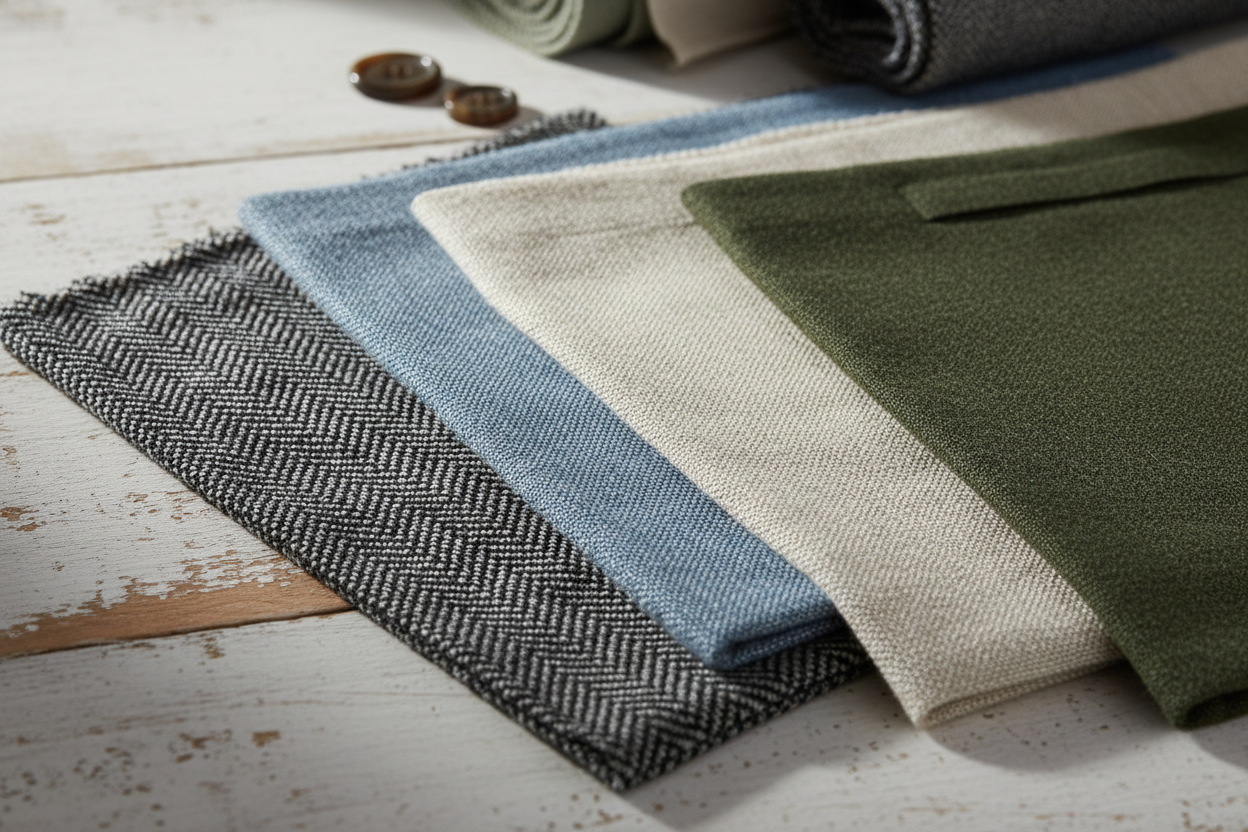
Linen is the dominant fabric for outdoor weddings, particularly in warm-weather
destinations. It breathes well, drapes naturally in heat, and photographs softly. The
downside is that linen wrinkles, which means grooms need to factor in dressing-time
logistics. Lightweight wool, often called "tropical wool" or "high-twist wool," is a
more wrinkle-resistant alternative that still breathes adequately. For beach weddings
specifically, unstructured jackets in linen or cotton-linen blends work better than
fully tailored suits, which can look stiff in soft outdoor settings.
For evening receptions and winter weddings, velvet is having its strongest year in a
while. Burgundy and forest green velvet are two of the most-ordered evening-wedding
fabrics at SuitCentury this season. Velvet works because it photographs richly under low
light, which is exactly the lighting condition at most evening receptions. It also
handles cooler temperatures better than wool because of its denser pile.
The constraint with velvet is that it does not work for daytime ceremonies. The
fabric reads as too formal and too theatrical in daylight. Grooms who want a velvet look
should plan it for evening events specifically, or pair a velvet jacket with non-velvet
trousers for a daytime hybrid look.
Indoor Formal Ceremonies
Traditional indoor weddings in churches, hotels, or formal venues still call for
structured wool. The difference in 2026 is that the wool is often lighter weight than in
past years, and the cut is closer to the body. The fully structured, heavy wool suit
with broad shoulders is increasingly rare. The fall
and autumn wedding collection covers most of the indoor-formal options.
Trend 5: The White Shirt Loses Its Default Status
The crisp white shirt under a wedding suit has been a default for so long that most
grooms do not think of it as a choice. In 2026 more grooms are treating it as one option
among several. Cream, dusty blue, soft taupe, and pale gray shirts are showing up under
wedding suits with growing frequency, particularly in earth-tone and tonal styling.
The trend is about lower visual contrast. A white shirt under a dark suit creates a
strong vertical contrast that grabs the eye. A cream or pale-blue shirt softens that
contrast, which makes the overall look feel more cohesive and less formal. For 2026
wedding aesthetics, which lean warmer and more naturalistic, the lower-contrast approach
photographs better.
How to Pick a Shirt Color
The simplest rule is to stay within the same color family as the suit. A sage green
suit pairs well with a cream or pale-yellow shirt. A terracotta suit works with a warm
white, cream, or a very pale dusty rose shirt. A navy suit, if going non-white, looks
best with a soft blue rather than gray. Avoid pure pastels, which can read childish.
Muted versions of any color work better than bright ones.
Black-tie events are still an exception. For formal black-tie or tuxedo weddings, the
white shirt remains the standard, and breaking it tends to read as a mistake rather
than as a style choice. The shift toward colored shirts is happening in semi-formal and
outdoor weddings, not in formal evening events.
The Tie Question
If the shirt is not white, the tie becomes more important as a visual anchor. The
cleanest approach is to pick a tie in the same color family as the shirt but a few
shades deeper. Cream shirt with a tan or rust tie. Pale blue shirt with a deep navy or
slate tie. The whole look should read as tonal. SuitCentury's accessory lineup includes
most of the tie options that work for tonal styling, including the rust long tie and the emerald green long tie.
How to Apply These Trends to Your Wedding
Five trends in one report is a lot to act on at once. The practical advice is to pick
the one or two trends that fit your wedding style and your personal taste, and ignore
the rest. A traditional church wedding in a major city does not need an earth-tone
palette to feel current. An outdoor beach wedding will probably benefit from
venue-driven fabric choices but not from a velvet three-piece. The trends are options,
not requirements.
For grooms working on their own wedding right now, the strongest single move is
usually around groomsmen styling. The shift from matching to coordinating is the
highest-impact change in the report because it affects the entire visual feel of the
wedding party in photos, and it requires the least amount of effort to implement. Pick a
suit color for the party, vary the accessories within a coordinated palette, and the
wedding looks meaningfully more styled.
For grooms shopping online, the recurring practical question is fit. Buying a wedding
suit online without trying it on first is the main reason grooms hesitate to skip the
rental option. SuitCentury's AI sizing calculator
addresses this case directly. It asks for three inputs (waist, height, weight), takes
under a minute, and produces a recommended size and fit configuration. The tool is
currently at 99.5 percent fit accuracy across more than 9,000 customer sizing
calculations. Combined with free home try-on and 30-day returns, it removes the main
risk of buying a wedding suit online.
Sources and References
Pinterest Predicts 2026: Annual trend forecast covering wedding
palettes and styling directions. Available at newsroom.pinterest.com.
The Knot Real Weddings Study: Annual U.S. wedding industry data
including venue type, guest count, and spending averages. Available at theknot.com.
Google Trends: Search demand data for wedding-related queries
from January 2024 to April 2026. Available at trends.google.com.
SuitCentury internal customer data: Order patterns, sizing
calculator results, and wedding-party group order data from the 2025 calendar year.
This report is updated annually. The 2027 edition will be published in May
2027.
Where to Start
The complete 2026 wedding collection covering the colors, fabrics, and fit options
described in this report is available in SuitCentury's 2026
wedding collection. Grooms unsure about sizing can use the AI sizing calculator before ordering. Wedding parties with
members in different cities can use the group ordering system to
coordinate suits across the party. Suit and tuxedo
bundles are available starting at $199 and include the jacket, pants, dress shirt,
tie, and socks.
Organize Event For Groups
With the top rated event creator, wedding event creator for groups! Best for wedding, prom and special events! Suit up yourself and your groomsman!
With just few easy step you can create an event, invite the members and get professional help!




0 Comments